



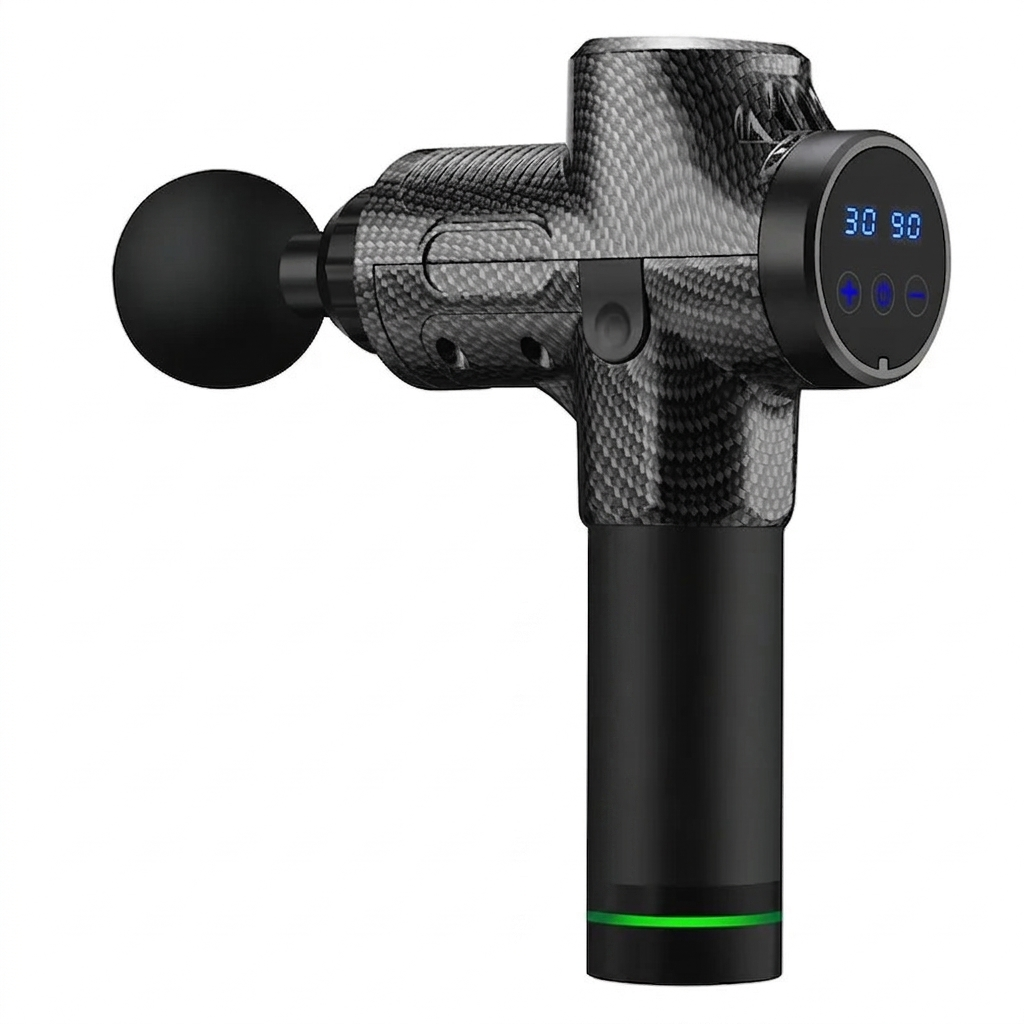
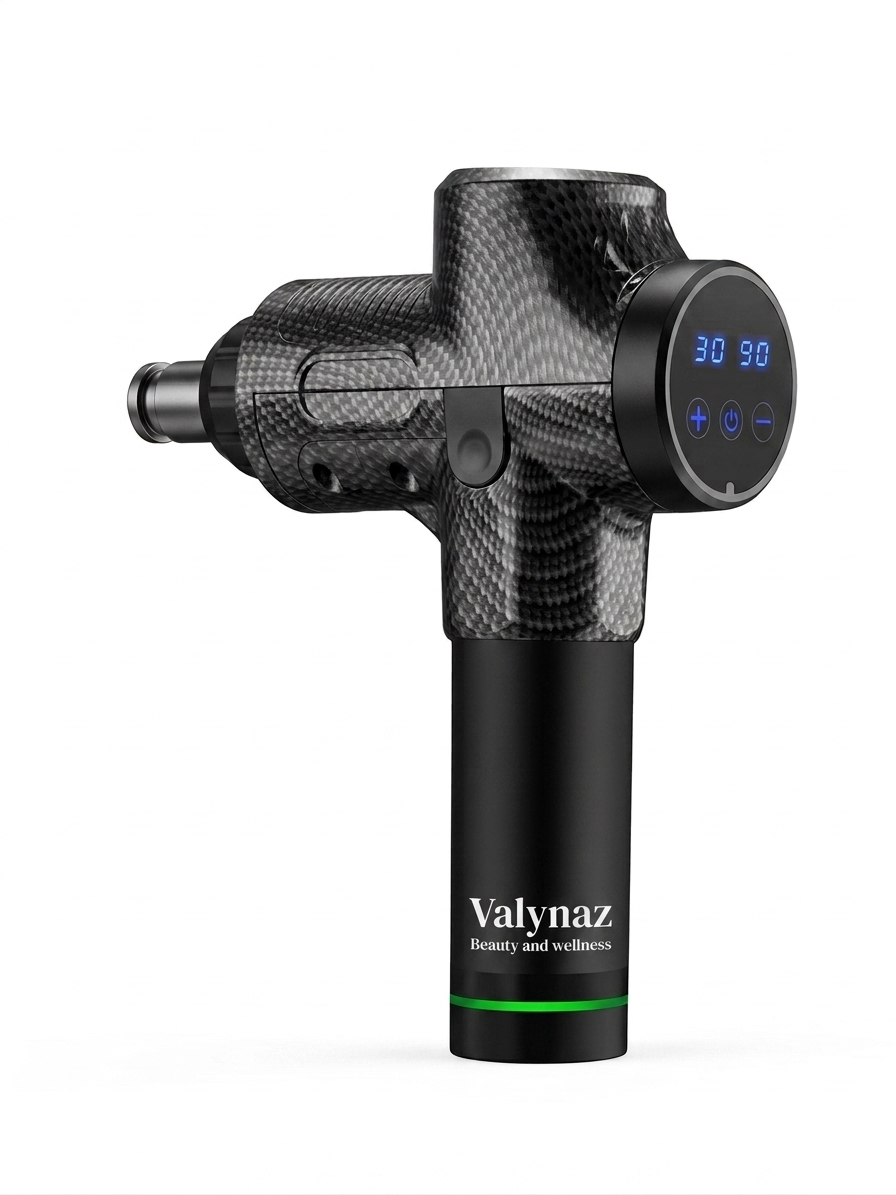
VALYNAZ™ Deep-Relief Percussive Massage Gun (24V)
- Regular price
-
$149.99 - Regular price
-
$0.00 - Sale price
-
$149.99
Description
Professional Recovery, Reimagined for You.
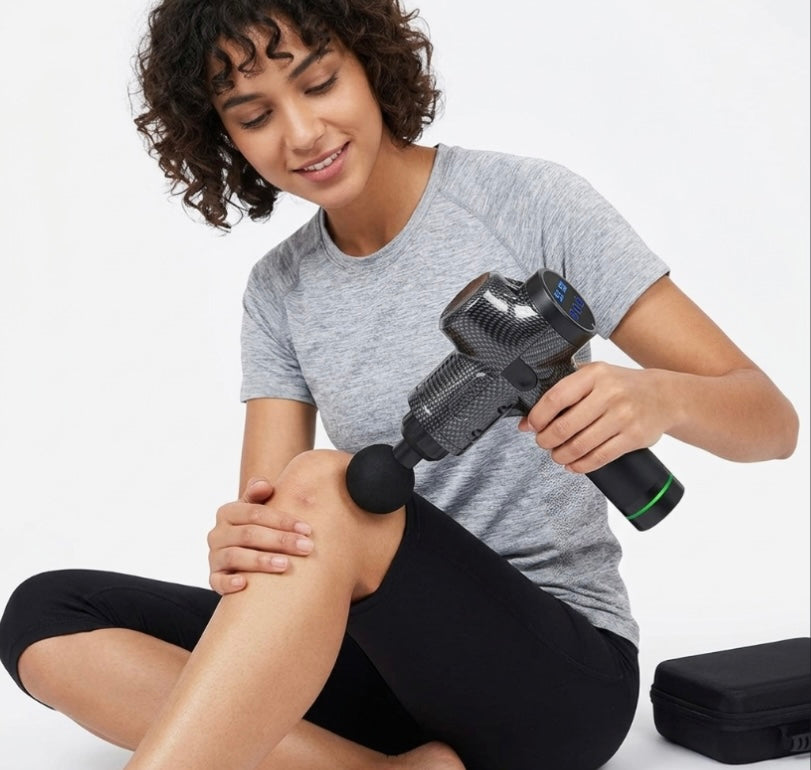
Don’t let muscle tension hold you back. Whether it’s post-workout soreness or the daily stress of a busy lifestyle, the VALYNAZ™ Deep-Relief Massage Gun delivers the ultimate recovery experience. Engineered with advanced percussive technology, it reaches deep into the muscle tissue to melt away knots, improve circulation, and restore your body’s natural mobility. It’s not just a massage; it’s a total body reset, designed to keep you moving with confidence and ease.
What You Need To Know:
• Instant Muscle Liberation: Deep-tissue percussion targets the root of muscle pain, instantly breaking up knots and releasing stubborn tension in seconds.
• Rapid Recovery & Repair: By boosting blood flow and lymphatic drainage, it flushes out toxins and lactic acid, significantly reducing "DOMS" (delayed onset muscle soreness).
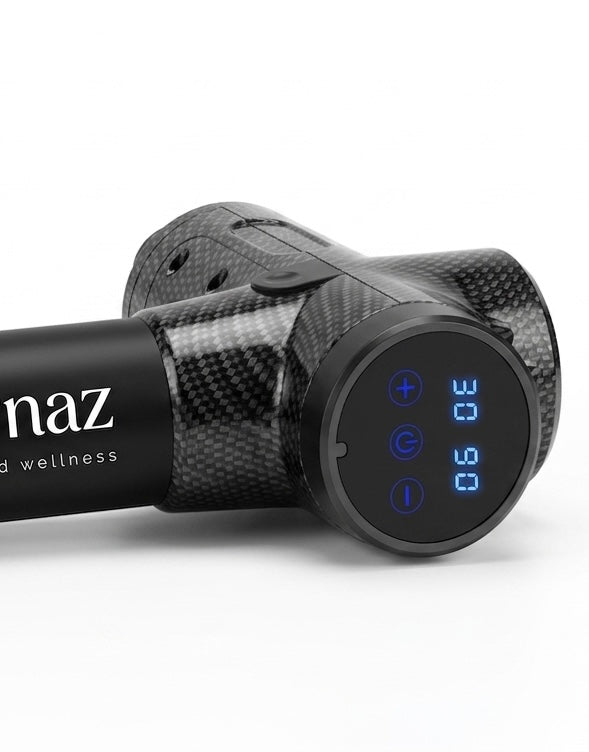
• Customized Intensity: Featuring multiple speed levels, you can switch from a gentle, soothing massage to a high-intensity deep-tissue treatment at the touch of a button.
• Quiet-Glide Technology: Powerful yet whisper-quiet. Enjoy your recovery session while watching your favorite show or relaxing in peace without the noisy distractions.
• Sleep Better, Live Better: Using the device on your neck and shoulders before bed helps lower cortisol levels and physical stress, promoting deeper and more restful sleep.
How To Use:
1. Select: Choose the massage head that fits your needs (Round for large muscles, Bullet for deep knots, or Flat for total body).
2. Activate: Turn on the device and start at the lowest speed setting to let your muscles acclimate.
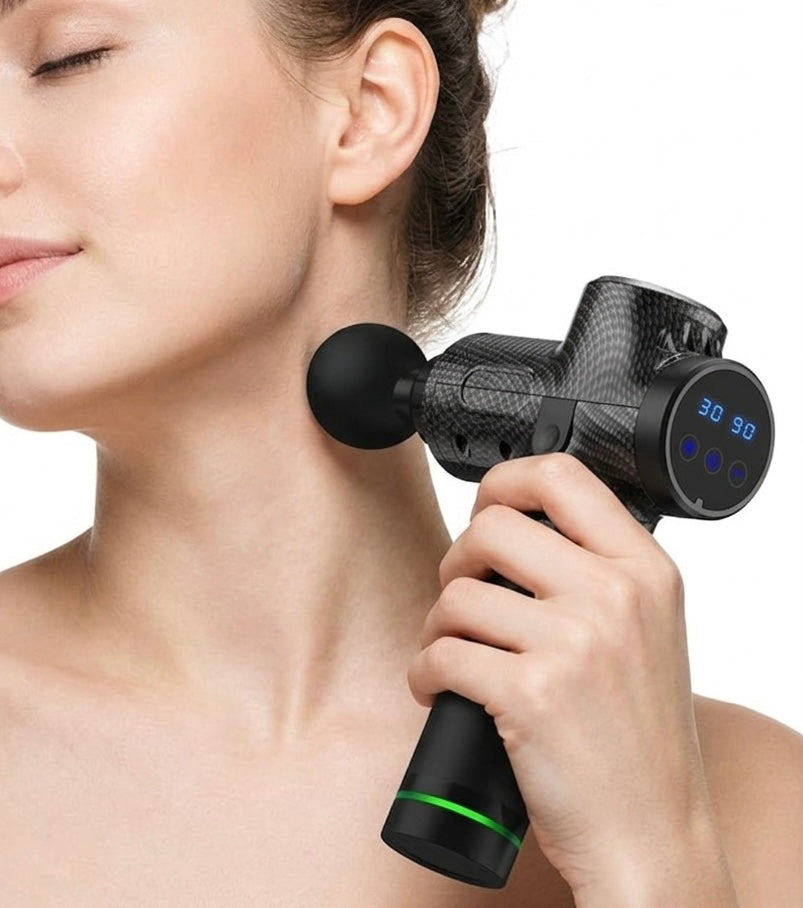
3. Float: Gently glide the device over the muscle area for 1–2 minutes. No need to press hard; let the percussive power do the work for you.
4. Recovery: Focus on areas of tension and breathe through the relief. Use daily for maintenance or after physical activity for recovery.
What’s in the Box?
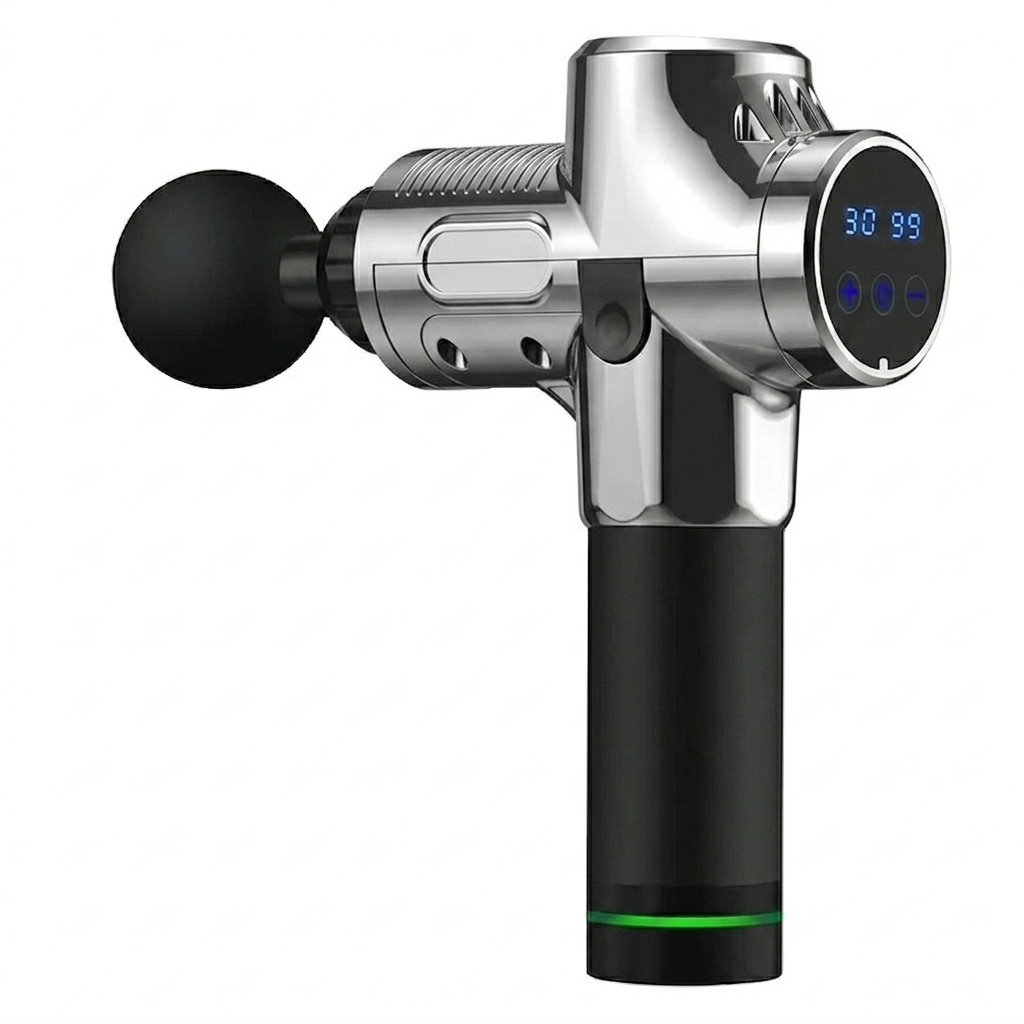
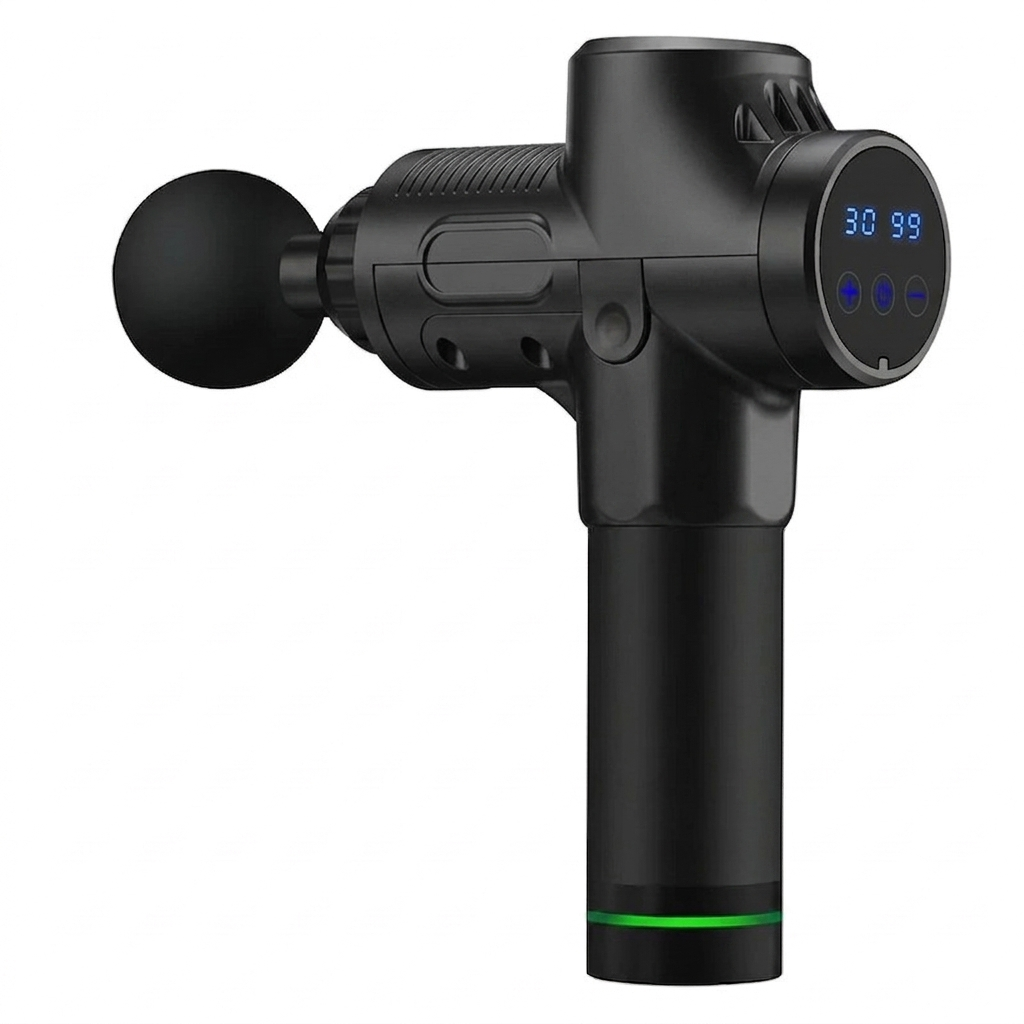
1. VALYNAZ™ Deep-Relief Massage Gun: High-performance, carbon-fiber finished recovery tech.
2. 6 Interchangeable Massage Heads: A dedicated tool for every muscle group in your body.
3. Universal Fast-Charging Cable: Long-lasting battery life for weeks of cordless relief.
4. Luxe Carbon-Style Carrying Case: Keep your wellness essentials organized and portable.
Why Valynaz?
• Superior Ergonomics: Designed with a balanced, non-slip grip that allows you to reach 90% of your body—including your own back—without strain.
• High-Torque Performance: Unlike cheaper alternatives that stall under pressure, our motor is built to maintain consistent speed even during deep-tissue work.
• Sleek Professional Aesthetic: Finished in a premium matte/carbon-fiber texture that reflects the high standards of the Valynaz™ brand.
The VALYNAZ Promise
We bridge the gap between professional athlete-grade recovery and high-end luxury. Experience the difference of a body that feels as good as it looks.
your journey to visible results
Ball head → Large muscle groups → General recovery and tension relief
Flat head → Back and shoulders → Dense muscle treatment
Bullet head → Trigger points → Precise deep tissue
Fork head → Spine-adjacent muscles → Safe paraspinal treatment
Cushion head → Sensitive areas → Gentle relaxation mode
shipping & delivery
Free worldwide shipping on every order.
Orders processed within 1–3 business days.
Estimated delivery within 7–14 business days.
Full tracking provided via email.
warranty & returns
Warranty
1-year warranty covering manufacturing defects.
Free replacement for any device that malfunctions under normal use.
Simple claims process — just email us with your order number.
Returns
30-day money-back guarantee. Try it risk-free.
Please review our full safety guidelines before use (see Contraindications section below).
Couldn't load pickup availability

did you know?


the science behind massaging guns
Percussive Therapy: Reaching the Muscle Depth That Hands Can't.
Human muscle tissue is organised in layers — superficial muscles near the skin surface, and deeper muscles responsible for power, stability, and posture. Traditional massage — even professional deep tissue massage — is limited in its ability to consistently reach the deeper muscle layers due to the physical limitations of hand pressure and fatigue. The benefits, while real, diminish as soon as the session ends and the therapist's hands fatigue.
Percussive therapy solves this limitation through mechanical consistency. The VALYNAZ™ 24V Massage Gun delivers rapid, repetitive pulses of pressure at up to [X] percussions per minute — penetrating up to 12mm into muscle tissue with consistent force throughout the entire session. Each pulse creates a pressure wave that travels through the superficial muscle layers to reach the deeper tissue, disrupting adhesions (muscle knots), increasing local blood flow, and triggering the neurological inhibition of pain receptors in the treated area.
This mechanical stimulation activates the Golgi tendon organs — sensory receptors within muscle-tendon junctions that signal the nervous system to release muscle tension. This is the mechanism behind the immediate relief felt during percussive therapy — it is a genuine neurological and physiological response, not a placebo effect.

FIVE HEADS. TOTAL BODY RELIEF
Post-Workout Recovery, Chronic Tension Relief, Better Sleep — Daily.
The five interchangeable attachment heads of the Deep-Relief Massage Gun are each designed to optimise percussive therapy for different muscle types, tissue densities, and treatment goals.
The ball head is the workhorse of the system — ideal for large muscle groups including the glutes, quadriceps, hamstrings, and calves, where general tension relief and post-exercise recovery are the primary goals. The flat head targets the denser, more compact muscles of the back and shoulders — areas where chronic postural tension accumulates from desk work, screen time, and stress. The bullet head concentrates percussive force for precise treatment of individual trigger points — specific, localised areas of extreme tension that resist general massage. The fork head allows treatment of muscles adjacent to the spine — the erector spinae and paraspinal muscles — without direct contact with the vertebral column. The cushion head provides a gentler percussive experience for sensitive areas and general relaxation use.
Used for 1–2 minutes per muscle group before exercise, percussive therapy activates neuromuscular pathways and increases local blood flow — improving performance and reducing injury risk. Used after exercise, it accelerates the removal of metabolic waste products that cause soreness — reducing recovery time by up to 30% compared to passive rest.
FAQs
What is percussive therapy and how does the massage gun work?
Percussive therapy uses rapid, repetitive pulses of pressure delivered deep into muscle tissue. This breaks up knots, increases blood flow, reduces muscle soreness, and accelerates recovery — faster and more effectively than traditional massage.
What are the main benefits?
Each session is 10–20 minutes. We recommend starting with 10 minutes and gradualRelief from muscle tension, tightness, and knots
Faster post-workout muscle recovery
Reduced DOMS (delayed onset muscle soreness)
Improved blood circulation and lymphatic drainage
Relief from chronic tension in shoulders, back, and neck
Improved flexibility and range of motionly increasing to 20 minutes as your skin adjusts.
How many speed settings does it have?
The 24V Deep-Relief Gun features multiple speed settings (typically 3–6 levels) to accommodate everything from gentle relaxation to deep tissue treatment.
Which attachment head should I use for which area?
- Ball head: Large muscle groups — glutes, thighs, calves
- Flat head: Dense muscles — back, shoulders
- Fork head: Spine area (use either side, never directly on the spine), neck
- Bullet head: Targeted deep tissue — knots, trigger points
- Cushion head: Sensitive areas, spine-adjacent, general use
How long should I use it on each muscle group?
1–2 minutes per muscle group. Do not exceed 2 minutes on one area. Move constantly — do not hold stationary on one spot.
How often can I use it?
Daily use is safe. For post-workout recovery, use within 30 minutes of exercise. For general tension relief, use as needed.
Is it noisy?
The 24V motor is designed to be relatively quiet. Some vibration sound is normal during use, especially on higher settings.
Contraindications
Do not use the Deep-Relief Percussive Massage Gun if:
- You have blood clots (thrombosis) or deep vein thrombosis (DVT) — percussive therapy can dislodge clots
- You have bone fractures, stress fractures, or osteoporosis in the treatment area
- You have nerve damage or peripheral neuropathy in the treatment area
- You are pregnant — avoid use on the abdomen, lower back, and legs
- You have open wounds, bruises, or inflamed skin in the treatment area
- You have varicose veins — avoid directly over varicose veins
- You have implants or hardware in the treatment area (joint replacements, plates, screws)
- You have a herniated disc or spinal condition — consult your doctor before use on the back/neck
- You have cancer in the treatment area — avoid
- You are under 18 years of age without adult supervision
- You have inflammation or joint swelling (e.g. active arthritis flare) — wait until resolved
- You have had recent surgery in the treatment area — wait until fully cleared by your doctor
Never use directly on the spine, neck vertebrae, joints, or any bony area. Always use on the muscle tissue surrounding these areas. Never use on the front of the neck.
Sensitivity Test
If you're new to percussive massage or have sensitive muscles, follow this first-use protocol:
First-use test:
- Select the lowest speed setting
- Attach the cushion or ball head (softest options)
- Apply to your calf muscle for 30 seconds
- Assess how your muscle feels during and immediately after
Normal sensations:
- Vibrating pressure sensation during use
- Muscle may feel slightly tender immediately after — like after a good massage
- Improved looseness or relaxation in the muscle
Stop use and consult a professional if:
- Sharp or shooting pain during use
- Numbness or tingling that doesn't resolve
- Increased pain after use (beyond mild tenderness)
- Bruising or skin irritation at the application site
First full-body session guide:
- Use lowest setting throughout your first session
- Spend no more than 60 seconds on each muscle group
- Avoid bony areas completely
- Avoid the lower back if you have any history of back issues — start with calves and thighs only
- Gradually increase speed and duration over 1–2 weeks as your muscles adapt
Post-session care:
- Drink water after your session — percussive therapy mobilizes fluids in the body
- Light stretching after a session enhances the recovery benefits
- If muscles feel tender the next day, this is normal for first-time use and will reduce with regular sessions